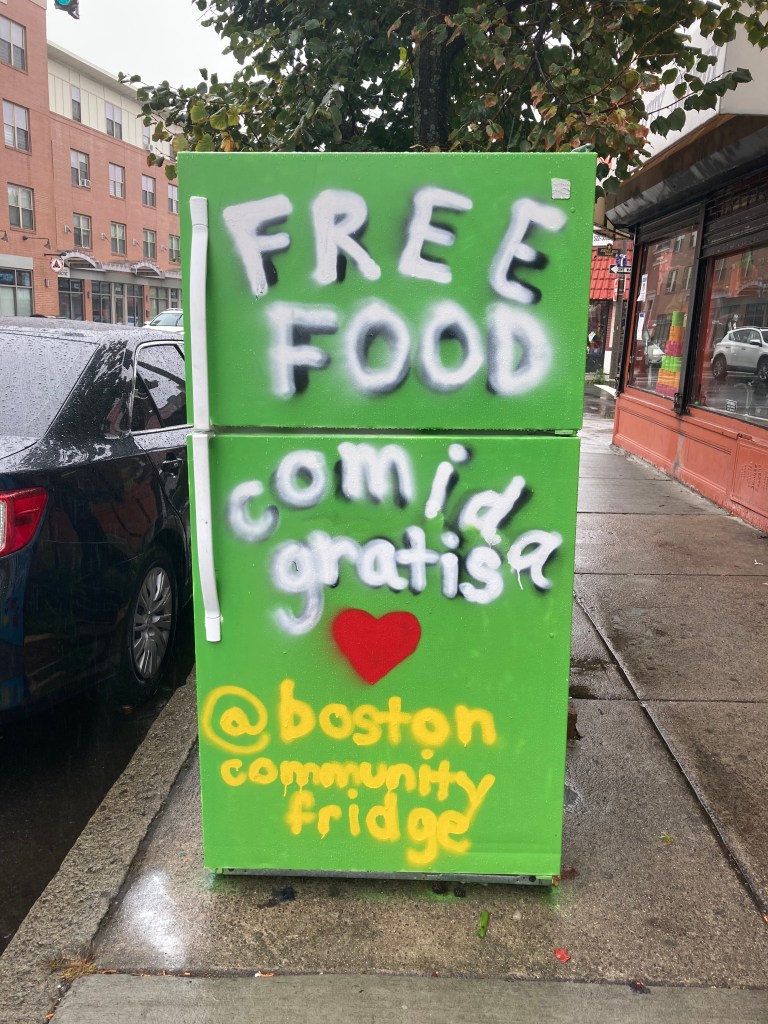
In Jamaica Plain, a fridge sits untouched outside of a barber shop in the rain, the front painted with the words, “free food, comida gratis,” along with a red heart. Stocked full yesterday morning, only a few vegetables remain inside the fridge.
“Usually, there’s a lot of people coming in and out. There’s just not a lot of traffic today because there’s bad weather,” says Jeremy Lamarque, a resident living in an apartment located next to the fridge.
The Boston Community Fridge project is helping to alleviate the city’s growing food insecurity, installing community fridges all over the city for anyone to leave or take free food from. Inspired by successful community fridges in New York City, and motivated by the impact that the pandemic has had on her community, Jamaica Plain resident Veronica Bettio started this project after noticing that there were no similar initiatives in Boston. Beginning with Bettio’s own community, volunteers came together to install a fridge in Jamaica Plain, providing food for any fellow residents who need it.
After gaining social media traction, more local volunteers reached out to Veronica via instagram, wanting to install a fridge in their own neighborhoods. From there, the project expanded, and as of today, there are currently fridges in Dorchester, JP, Somerville, and Roxbury. A new addition is currently being initiated in Allston, still in the process of finalizing their host business and location.
The fridges are kept stocked and running through various means, the first being a business willing to host the fridge in or outside of their facilities. Hosts help to stock the fridge, but they also have assistance from the volunteers, local nonprofits and businesses, and community members themselves, who are encouraged both to take and leave food. Bettio stresses the importance of the community’s involvement in the success of this project. “The fridges really bring people together in a way that is needed during this pandemic,” says Bettio.
In the wake of the pandemic, Boston’s food insecurity has increased by 59%, going from one in thirteen people experiencing food insecurity to one in seven, according to data from the Greater Boston Food Bank. For children, the risk is even higher, with a projected 93% increase in Eastern Massachusetts. As volunteers witnessed the toll that the pandemic was taking on fellow community members, they felt that state and city officials weren’t doing enough to address this issue. “If I went to members of the city council asking them to put up a fridge, they would say no,” says Mikel Valley, one of the volunteers helping with the Allston fridge.
Motivated by a desire to provide the support that they feel the government isn’t providing, volunteers view community fridges as a means to both address the problem of food insecurity while also bringing the community together during these unprecedented times. “The real goal of these fridge projects is not even the fridge, it’s to show us how to organize with members of our community. No one knows how to help a community better than the members themselves,” says Valley.
Those involved with the project encourage anyone to get involved, whether that be by providing food and drink for the fridge, business contacts to reach out to for sponsors, or even artistic skill to decorate the fridge. To find more information, visit the group’s instagram page @bostoncommunityfridge, or email them at bostonfridges@gmail.com.
 Anna Brosnihan's Blog